Retirement planning
Retire with a plan that keeps pace with you.
Planning for retirement is about more than saving money. It’s about the life you want to live and the income it will need. I’ll help you set clear goals, understand where your income will come from and build a strategy that can be reviewed as your retirement unfolds.
Your first meeting is at no cost and without obligation. Any fees for advice beyond the initial meeting would be explained and agreed with you before any work begins.

- When to startAs retirement comes into view, or once you’ve stopped work
- AdviceWritten advice, with any fees agreed before work begins
- ReviewsEach year, for clients in an ongoing service arrangement
What a retirement plan covers
Your roadmap, your super and your income. Here’s how I help with each.
-
When can I stop working?
A retirement roadmap
Working out what you want retirement to look like, the income it may need, where that income could come from and what to do in the years before you stop work.
-
Is my super enough?
Making the most of your super
A close look at your fund’s fees, investment options and performance, and whether extra contributions such as salary sacrifice or personal contributions suit you. Changes are recommended only where they’re appropriate for you.
Super and SMSF advice -
Will the income last?
Planning your income
How you’ll draw an income once you stop work, using account-based pensions, annuities or a combination, balancing regular income with keeping some money invested for later.
Spending, stability and growth
Planning your income
A plan for spending, stability and growth.
Retirement savings can do different jobs: covering everyday costs, steadying the portfolio and supporting your needs further ahead.
-
Spending
For everyday life.
Money for regular living costs, planned expenses and anything you may need at short notice.
-
Stability
For balance.
A steadier part of the portfolio to help balance the ups and downs of growth investments. It can still rise and fall in value.
-
Growth
For the years ahead.
Investments such as Australian and international shares, held for the longer term. They can rise and fall significantly in value, sometimes over extended periods.
How they work together
I’ll help you decide how much to set aside for spending and how the rest is invested, based on your income needs, your plans and your comfort with risk.
You can’t control when markets fall. You can plan for it.
-
01
Investment markets have good years and bad years, but your living expenses continue regardless.
-
02
If investments that have fallen in value must be sold to pay everyday bills, that money is no longer invested if markets recover.
-
03
This doesn’t mean avoiding investments that can grow. Your retirement could last 20 or 30 years or more, and some of your money may still need to grow.
It means deciding in advance where your income could come from when markets are down.
General information only. This section describes my general approach and does not take into account your objectives, financial situation or needs. Setting money aside has trade-offs. Cash usually earns less over time, markets may take an extended period to recover, and there’s no guarantee that investments which have fallen can always be left untouched.
Clear steps. Fees agreed upfront.
Your first meeting is at no cost and without obligation. Any fees for advice beyond the initial meeting would be explained and agreed with you before any work begins. If you decide to go ahead, you’ll receive written advice.
- Step 01
A first conversation
We talk about where you are, what matters to you and what you’d like help with.
- Step 02
Understanding what matters
I get to know your goals, income, assets and how you feel about risk, so your strategy reflects your life rather than a formula.
- Step 03
Your Statement of Advice (SOA)
You receive clear recommendations in a written Statement of Advice. Any fees are explained and agreed with you before any work begins.
- Step 04
Reviewing and looking ahead
For clients in an ongoing service arrangement, I review your strategy each year, looking forward rather than just reporting on the past.
What it costs, in plain sight.
How it works and what it costs- Your first meetingNo costWe talk about where you are, what matters to you and what you’d like help with. Your first meeting is at no cost and without obligation. Any fees for advice beyond the initial meeting would be explained and agreed with you before any work begins.
- Advice and implementation feesAgreed upfrontBased on complexity and agreed with you in writing before any work begins. Platform and investment costs are separate.
- Ongoing adviceFixed feeOngoing advice is a fixed annual dollar fee, not a percentage of your balance. Ongoing advice starts from $5,500 a year, including GST, depending on the complexity of your circumstances and whether the advice covers one person or a couple.
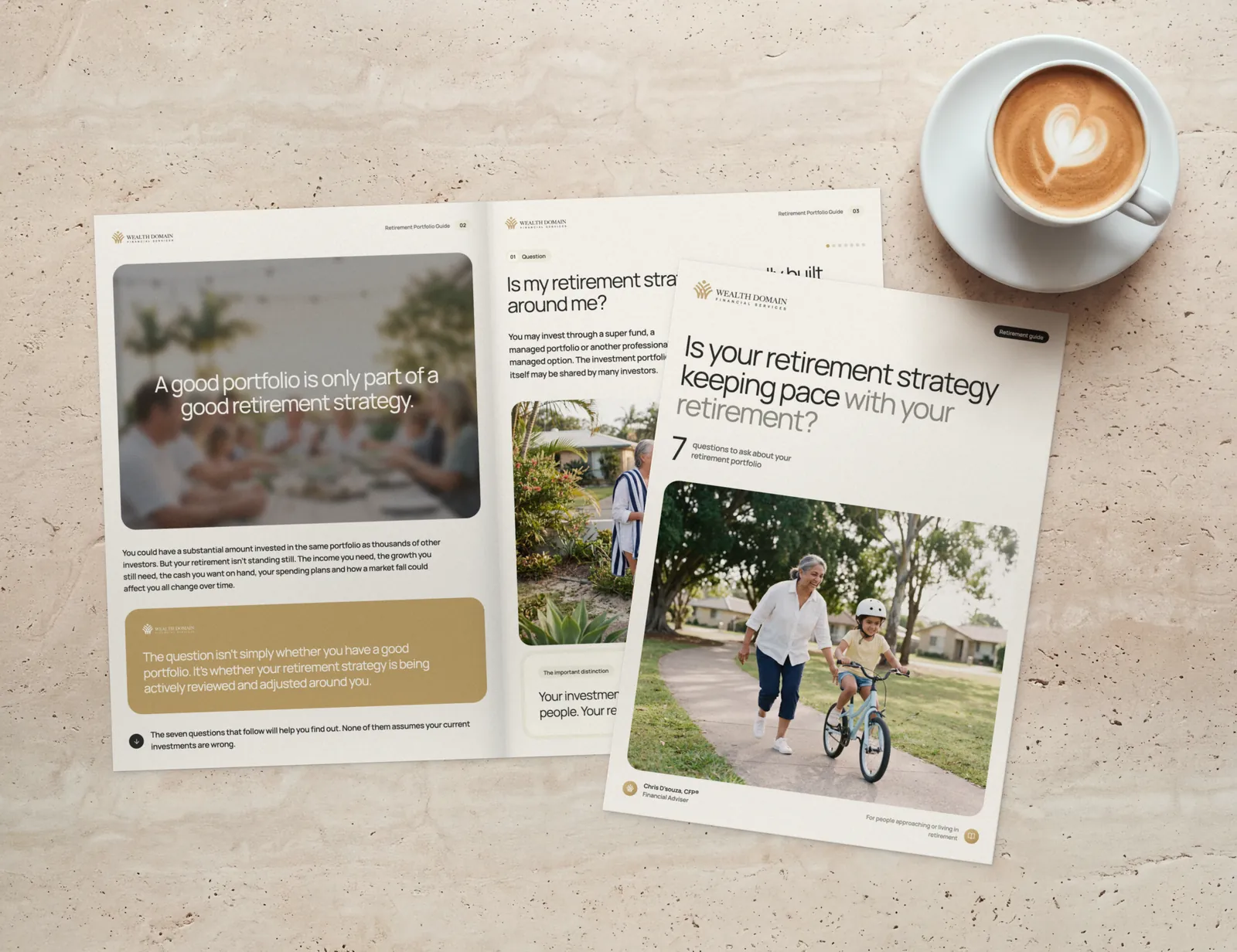
Take a few minutes
Download the guide (PDF, 5.7 MB) (opens in a new tab)How confidently could you answer these seven questions?
The 7 Questions guide covers what to ask about your retirement portfolio, and what the answers can tell you. None of the questions assumes your current investments are wrong.
General information only. The information on this page and in the 7 Questions guide is general in nature and does not take into account your personal objectives, financial situation or needs. Before acting on it, consider whether it is appropriate for your circumstances.
Retirement planning questions
Can’t see your question here? Book a time and ask me directly.
Book a conversationOnce retirement is in view. The years just before you stop work are when the big decisions come together: when to stop, how much is enough and how your super will become an income. If you’ve already retired, it’s still worth having a clear plan for your income and investments.
Yes. A Retirement Portfolio Second Opinion is designed for exactly that. The initial meeting is provided at no cost and without obligation. Any fees for advice beyond the initial meeting would be explained and agreed with you before any work begins. There’s no requirement to change advisers or investments.
Yes. I advise on self-managed super funds (SMSFs), including whether an SMSF suits you at all.
For clients in an ongoing service arrangement, we look ahead at three things that keep changing: your life, your portfolio and investment markets. The aim isn’t simply to describe what happened, but to decide what needs attention for the year ahead.

Let’s start with a conversation.
Your first meeting is at no cost and without obligation.
Any fees for advice beyond the initial meeting would be explained and agreed with you before any work begins.